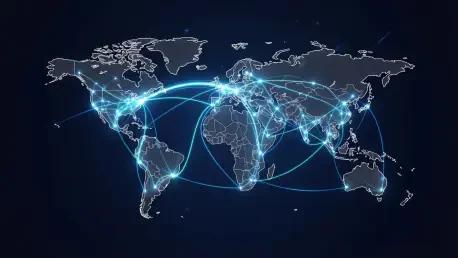

Terrestrial quantum signals degrade over thousands of miles, necessitating the use of PQC to secure the long-distance segments of intercontinental networks. The recent activation of an operational hybrid security network connecting facilities in Geneva, Switzerland, and Seoul, South Korea, marks a fundamental shift from laboratory curiosity to enterprise-grade infrastructure. This deployment by IonQ demonstrates a practical “defense-in-depth” blueprint designed to protect sensitive intellectual property and internal communications against the rising specter of quantum cryptanalysis. By establishing a functional link across these vast distances, the project proves that multinational organizations can now move beyond theoretical risks and implement tangible safeguards. As sovereign states and global corporations grapple with the vulnerabilities of traditional encryption, this specific deployment provides a scalable architecture that bridges the gap between today’s digital landscape and the quantum era. It signals that the transition to a post-quantum world is an immediate operational requirement for all major players in the tech industry.
The Synergy of Physical and Mathematical Defense
Local Hardware Deployment: Information-Theoretic Security
In the metropolitan loops of Geneva, the network leverages advanced Quantum Key Distribution (QKD) hardware, specifically the Clavis XG series developed by the company’s European networking division. This approach offers information-theoretic security, a gold standard where protection is derived from the fundamental laws of physics rather than the mathematical complexity that classical computers struggle to solve. By encoding symmetric encryption keys into optical quantum states and transmitting them over dark or multiplexed fiber, the system creates a physical safeguard where any attempt at eavesdropping would disturb the quantum state, triggering an immediate alarm. Although terrestrial QKD provides unparalleled security, it remains constrained by physical fiber attenuation, which typically limits its effective range to several hundred kilometers. This makes it an ideal solution for securing localized hubs, corporate campuses, or regional data centers where the integrity of physical signal transmission can be maintained without significant degradation of the underlying quantum information.
Global Data Routing: Algorithmic Protection Across Continents
To bridge the expansive gap between European and Asian continents where physical quantum signals cannot survive, the network integrates NIST-standardized Post-Quantum Cryptography (PQC). This software-defined layer employs complex mathematical problems, such as lattice-based cryptography, which are specifically engineered to remain intractable for even the most advanced quantum processors. By utilizing a Hybrid Key Encapsulation Mechanism (KEM), the system wraps sensitive data in mathematical layers that secure VPN endpoints and encrypted transit tunnels across the public internet and subsea cables. This hybrid strategy ensures that if an intermediate relay or a piece of classical infrastructure along the thousands of miles of transit were compromised, the core integrity of the communication would remain shielded. This dual-layered integration provides a seamless transition between the hardware-heavy security of local metropolitan loops and the robust, algorithm-based requirements of a wide-area network, ensuring that data is safe throughout its entire journey.
Mitigating Immediate and Future Vulnerabilities
Strategic Defense: Neutralizing Retrospective Decryption
The primary driver behind this intercontinental deployment is the pressing threat of “Harvest Now, Decrypt Later” (HNDL) tactics employed by sophisticated state and non-state actors. In this scenario, adversaries capture and store encrypted traffic today, waiting for the moment when quantum computers reach the scale necessary to break standard 256-bit elliptic-curve cryptography. For organizations managing intellectual property with a long shelf life, such as proprietary quantum processor telemetry or sovereign communications, the risk of retrospective decryption is an immediate concern rather than a distant worry. IonQ’s hybrid network proactively addresses this vulnerability by ensuring that current data transmissions are protected by a combination of physical and mathematical barriers. By implementing these layers now, institutions can verify that their most sensitive assets remain confidential even when the computational landscape shifts fundamentally in the coming months, thereby neutralizing the long-term strategic advantage sought by those capturing data today.
Technical Benchmarks: Navigating the Accelerating Q-Day Timeline
As the timeline for “Q-Day”—the point when quantum systems become capable of breaking standard encryption—continues to accelerate, the pressure on global regulatory bodies has reached a fever pitch. Current industry benchmarks suggest that Shor’s algorithm might be executed against existing standards as early as late 2026, prompting urgent mandates from the White House and the European Commission. These directives require a rapid transition to quantum-resistant standards, recognizing that the complete overhaul of a multinational corporation’s cryptographic infrastructure typically requires a multi-year effort. IonQ’s deployment serves as a critical pilot program, offering a real-world testbed for the cryptographic agility needed to swap out algorithms as new vulnerabilities are discovered or NIST standards evolve. This proactive adoption of hybrid security models is becoming a central pillar of corporate risk governance, ensuring that organizations are prepared for the regulatory shifts that are already being implemented across diverse international jurisdictions.
Global Strategic Implications and Enterprise Resilience
International Partnerships: Building a Quantum-Safe Ecosystem
The successful connection between Geneva and Seoul is part of a much broader strategy to expand the global quantum-safe footprint through diverse regional partnerships. Beyond this specific link, the company has played a pivotal role in establishing national quantum infrastructures in countries such as Slovakia and Romania, while also supporting Singapore’s Nationwide Quantum-Safe Network Plus initiative. These projects collectively indicate a significant shift in the technology sector, where quantum-safe security is evolving from niche research into a fundamental component of the world’s IT infrastructure. By deploying these systems in varying geopolitical and technical environments, the industry is gaining invaluable data on the interoperability of hybrid models across different network topologies. This expansion ensures that the move toward quantum resilience is not limited to isolated hubs but is instead integrated into the global supply chain and the backbone of international communications, providing a robust defense for the data that fuels our modern digital economy.
Operational Findings: Establishing Standards for Future Readiness
The successful operation of the intercontinental link provided a definitive roadmap for securing digital assets in a landscape defined by quantum advancements. This project demonstrated that the integration of physical hardware solutions with advanced mathematical algorithms offered a comprehensive defense against both current and future cryptographic threats. Organizations that observed this deployment recognized the necessity of implementing cryptographic agility to maintain long-term security in an era of rapid change. The initiative proved that waiting for quantum computers to reach full maturity was a high-risk strategy that could lead to the compromise of historical data. Moving forward, the industry learned that the most effective path toward resilience involved the immediate adoption of hybrid models and the continuous monitoring of emerging standards. This deployment ultimately established a new standard for global communication, where the marriage of physics and mathematics ensured the continued integrity of the world’s most sensitive information for years to come.