
The transition from chaotic, signal-cluttered wireless environments to the precision of private 5G infrastructure marks a decisive turning point for global logistics and industrial operations. As the economic vitality of modern trade depends on the seamless movement of goods, facilities like Port Nelson in New Zealand have become testing grounds for the next generation of connectivity. Serving as the primary gateway for the South Island’s export economy, particularly the wine production of the Marlborough region, the port manages a complex supply chain that includes the constant import of glass bottles and the export of premium agricultural products. In 2025, the facility moved over three million tons of cargo, yet this success exposed deep-seated inefficiencies in the legacy communication systems. To maintain a competitive trajectory into 2026, the port’s leadership realized that traditional networking solutions were no longer sufficient for the demands of real-time inventory management and the safety of its workforce.
The connectivity crisis at industrial hubs often stems from the physical reality of the environment itself. For years, Port Nelson relied on industrial Wi-Fi to support warehouse operations, expecting forklift operators to scan every pallet to maintain an accurate database. However, the stacks of timber and thousands of glass bottles acted as impenetrable barriers to Wi-Fi signals, creating dead zones that paralyzed productivity. Beyond physical obstructions, the network suffered from significant interference. Electrical noise from electric vehicle fleets and even the blue safety lights on reversing forklifts frequently disrupted the unlicensed spectrum. Furthermore, external signal noise from neighboring residential areas surged during the evenings, causing the port’s network stability to plummet exactly when operations needed to be at their peak. These failures proved that simply adding more Wi-Fi access points was a futile effort against the fundamental physics of unlicensed radio waves.
Evolution and Fundamentals of Private 5G Networks
Private 5G represents a fundamental shift away from the “best effort” delivery of traditional wireless systems toward a dedicated, localized cellular environment tailored for industrial precision. Unlike public networks, these systems provide an organization with exclusive control over a closed ecosystem, ensuring that mission-critical data does not compete with consumer traffic. This technology emerged as a response to the need for high-reliability connectivity in radio-hostile environments where interference makes standard solutions unreliable. By integrating cellular protocols into a private framework, businesses can now achieve the stability of a wired connection with the mobility of a wireless one.
The core philosophy of a private 5G network is to bridge the historical gap between information technology and operational technology. In an industrial setting, this means providing a communication layer that is robust enough to handle high-density data from autonomous vehicles while remaining secure enough to protect sensitive inventory logs. The transition to this technology is often driven by the realization that connectivity is not just a support function but a primary utility for modern business. It provides a level of deterministic performance—meaning the network behaves predictably under heavy load—that unlicensed spectrum technologies simply cannot match.
Technical Architecture and Core Components
High-Performance Radio Equipment and Spectrum Management
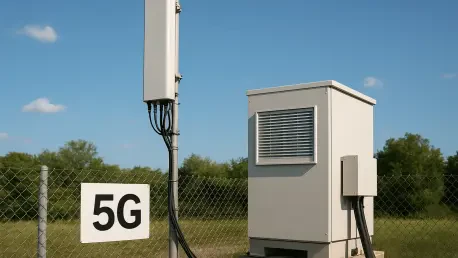
The backbone of this infrastructure relies on a sophisticated deployment of small cell radios and dedicated radio units that operate within managed frequency bands. By utilizing licensed or shared spectrum, private 5G avoids the crowded “noise” found in the unlicensed bands used by Wi-Fi and Bluetooth. This strategic use of spectrum allows signals to penetrate dense industrial materials like stacked containers, timber, and heavy machinery, ensuring consistent coverage across thousands of square meters. The result is a network that remains stable even in the face of external electrical interference or heavy physical obstructions that would typically scatter or absorb weaker signals.
Spectrum management within a private 5G framework allows for granular control over bandwidth allocation. Administrators can prioritize specific types of traffic, such as real-time video for safety monitoring or telemetry for automated cranes, over less critical data transfers. This ensures that the most vital operations always have the throughput they need, regardless of total network congestion. This level of control is what differentiates industrial-grade infrastructure from general-purpose wireless solutions, providing a level of reliability that is essential for 24-hour operations in high-stakes environments.
Ruggedized Edge Hardware and Hybrid Connectivity
To ensure that mobile assets remain connected as they move through different operational zones, the infrastructure incorporates ruggedized routers specifically designed for harsh conditions. These devices, such as the dual-SIM units installed on forklift fleets, allow for seamless roaming between the private network and public cellular backups. If a vehicle moves beyond the reach of the private 5G radio, the hardware automatically switches to a public carrier signal, preventing any loss of data or interruption in communication. This hybrid approach provides a safety net that is vital for maintaining the uptime of autonomous or semi-autonomous machinery.
The hardware is built to withstand the vibrations, dust, and temperature fluctuations common in shipping ports and manufacturing plants. These edge devices act as more than just bridges; they are intelligent nodes that can process data locally before sending it back to the core network. This reduces latency, which is the time it takes for a signal to travel from the device to the server and back. In an environment where a fraction of a second can be the difference between a safe stop and a collision, the low-latency performance of 5G hardware becomes a critical safety feature.
Centralized Management and Network Visibility
Modern private 5G deployments are increasingly defined by their integration with cloud-based management platforms that provide total visibility into the health of the network. These software suites allow IT and operations teams to monitor data throughput, signal strength, and device status in real-time from a centralized dashboard. This shift toward “softwarization” means that network functions can be updated or scaled without requiring massive physical overhauls of the infrastructure. It allows a facility to start with a small deployment and expand as their operational needs grow.
This centralized visibility transforms the role of the IT department from reactive troubleshooting to predictive management. Instead of waiting for a forklift operator to report a connectivity drop, administrators can identify a weakening signal or a potential bottleneck before it impacts the workflow. This proactive stance is essential for maintaining the high-availability standards required by global logistics hubs. By providing a clear window into how data is moving through the facility, these management platforms enable more informed decisions regarding capacity planning and equipment upgrades.
Trends and Innovations in Industrial Connectivity
The current landscape of industrial connectivity is moving toward a “digital utility” model, where the network is treated as a foundational layer that enables all other technological innovations. One of the most significant trends is the replacement of legacy analog radio systems with high-fidelity Push-to-Talk platforms. These digital communication systems provide clear, instantaneous, and multi-channel messaging, overcoming the limitations of simplex radios where only one person could speak at a time. This transition significantly improves operational coordination, particularly in high-noise environments where clear communication is a prerequisite for safety.
Another emerging trend is the deeper integration of network functions with artificial intelligence. As facilities become more automated, the network must handle increasingly complex data streams from sensors, cameras, and automated vehicles. The industry is seeing a move toward more flexible, software-defined architectures that can adapt to changing operational requirements on the fly. This flexibility is crucial for businesses that need to scale their operations quickly in response to market demands without being slowed down by the limitations of their physical infrastructure.
Real-World Applications and Sector Deployment
Logistics and Port Operations: Solving the Density Challenge
In the shipping and logistics sector, private 5G has proven to be the only viable solution for the chronic connectivity issues found in high-density warehouses. By providing stable links for inventory management systems, ports can maintain real-time accuracy and increase their total throughput. The technology effectively eliminates the dead zones caused by the constant movement of heavy machinery and the storage of dense materials. For a hub like Port Nelson, this has meant the end of the “trial and error” approach to wireless networking, replacing it with a predictable and high-performing infrastructure.
The ability to maintain a constant connection with every asset in the yard allows for more sophisticated logistical planning. Containers can be tracked with greater precision, and the movement of goods can be optimized to reduce fuel consumption and wear on equipment. This level of operational awareness is only possible when the underlying network is capable of handling thousands of simultaneous connections without a loss in performance. The reliability of 5G ensures that the digital record of the port’s inventory always matches the physical reality on the ground.
Safety Enhancement and Computer Vision: Creating Digital Shields
Beyond simple data transmission, the high-speed uplinks provided by 5G enable sophisticated safety applications such as AI-driven geofencing. By utilizing existing CCTV feeds enhanced with computer vision algorithms, facilities can monitor the proximity between workers and heavy machinery in real-time. If a pedestrian enters a high-risk zone near a crane or a moving forklift, the system can trigger an automatic alert via the Push-to-Talk platform. This creates a digital “shield” around hazardous areas, providing an extra layer of protection that goes beyond traditional safety protocols.
This application of computer vision requires the massive bandwidth and low latency that only 5G can provide. High-definition video feeds must be transmitted and analyzed instantaneously to be effective in preventing accidents. The integration of these safety systems into the broader network infrastructure demonstrates how connectivity can directly contribute to a reduction in workplace injuries. It represents a shift from passive monitoring to active intervention, where the network itself plays a role in protecting the lives of the people working within the facility.
Challenges and Implementation Obstacles
Despite the clear advantages, the adoption of private 5G is not without its hurdles. The initial capital expenditure for radio equipment, core software, and ruggedized edge devices is significantly higher than that of a standard Wi-Fi deployment. For many organizations, justifying this upfront cost requires a long-term view of productivity gains and safety improvements. Additionally, the regulatory environment for spectrum allocation remains fragmented across different regions, which can complicate the rollout of standardized solutions for companies with global operations.
There is also a notable skills gap within the industry. Most internal IT departments are well-versed in Wi-Fi protocols and standard networking but may lack the specialized expertise required for cellular network engineering. Designing, deploying, and maintaining a private 5G network involves a different set of technical challenges, from signal propagation modeling to the management of SIM card lifecycles. Bridging this gap often requires partnerships with specialized telecommunications providers and a commitment to retraining existing staff to handle the complexities of this new infrastructure.
Future Outlook and Technological Trajectory
The future of private 5G lies in its role as an enabler for advanced automation, such as the use of autonomous drones for high-risk industrial tasks. We are already seeing the early stages of this, with drones being trialed for nighttime inventory counts and structural inspections of cranes and warehouse roofs. These applications remove the need for humans to perform dangerous high-altitude work and allow for more frequent and accurate assessments of a facility’s assets. As these technologies mature, they will become a standard part of the industrial landscape, supported by the low-latency backbone of the 5G network.
We should also expect to see a more robust integration with predictive maintenance models. By streaming real-time diagnostic data from sensors on every piece of equipment directly to AI engines, facilities can predict mechanical failures before they occur. This will lead to a reduction in unplanned downtime and a significant extension of the lifecycle for expensive capital equipment. The ultimate goal is the total “unmanning” of high-risk tasks, where the combination of reliable connectivity and advanced robotics creates a safer and more efficient operational environment for everyone involved.
Summary of Findings and Assessment
The overhaul of industrial connectivity through private 5G infrastructure proved to be a transformative shift for logistical hubs like Port Nelson. This technology addressed the fundamental failures of traditional wireless systems by providing a reliable, high-capacity network that was immune to the interference of hostile radio environments. The implementation successfully integrated high-performance radio equipment with ruggedized edge hardware, creating a seamless communication layer that supported both operational efficiency and worker safety. The project demonstrated that while the transition required a significant investment in both capital and technical expertise, the resulting “digital utility” served as a necessary foundation for the next generation of automation. Ultimately, the adoption of private 5G moved connectivity from a source of operational frustration to a strategic asset, ensuring that industrial facilities were prepared for the complexities of global trade. Managers and engineers found that the move away from the limitations of unlicensed spectrum was the only way to achieve the precision required for modern, data-driven logistics. Future developments will likely build on this foundation, further integrating artificial intelligence and autonomous systems into the daily workflow of the world’s most critical infrastructure.