
While early mobile edge computing initiatives in the 2010s lacked a clear market driver, the modern rise of AI inferencing has introduced a definitive demand-side catalyst for localized compute. In previous years, the promise of low-latency applications like remote surgery often felt like solutions looking for a problem that cloud structures could not solve. However, as we navigate through 2026, the volume of data from generative AI has strained centralized centers. Carriers are no longer just providing a pipe; they are localized cloud providers. The convergence of 5G Standalone networks and high-density neural processing units at the edge is finally closing the gap between potential and necessity. Enterprises find that shifting workloads to the network edge is now a requirement for efficiency. This shift marks a departure from cloud-centric models, signaling a new era of distributed intelligence that redefines how mobile devices interact with infrastructure in very direct ways.
Technical Foundations
5G Standalone Power
The widespread deployment of 5G Standalone architecture has finally provided the low-latency backplane necessary for mobile edge computing to thrive. Unlike early versions that relied on 4G cores, 5G SA enables sophisticated network slicing, allowing operators to reserve dedicated virtual pipes for high-priority edge traffic. This capability ensures that critical AI inference tasks, such as those used in precision manufacturing or real-time traffic management, receive the deterministic latency they require to function safely. Furthermore, the integration of Multi-access Edge Computing within the 5G core allows for the dynamic redirection of traffic to the nearest compute node, drastically reducing physical distance. This architectural shift from a centralized model to a distributed fabric represents the most significant change in telecommunications since the transition to IP, turning towers into mini-data centers that facilitate the next generation of hyper-responsive, localized digital services.
Localized AI Silicon
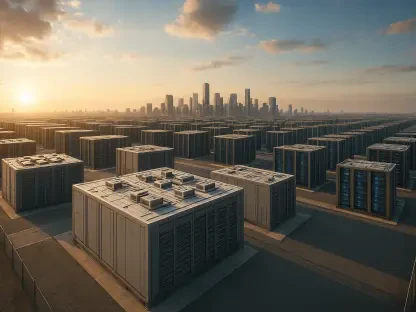
Complementing the network advancements is a new generation of specialized AI silicon designed specifically for the rigorous environment of edge nodes. In 2026, we see deployments of high-efficiency neural accelerators integrated directly into cellular base stations. These chips are optimized for low-power inferencing, enabling them to process complex models and high-resolution video streams without the thermal overhead of traditional server-grade CPUs. By placing these high-performance compute resources at the edge, organizations can maintain data sovereignty and reduce the high costs associated with backhauling massive datasets to regional cloud hubs. This hardware evolution has transformed the edge from a simple relay point into a processing layer capable of making millisecond decisions. It allows for the deployment of sophisticated AI agents that interact with users locally, ensuring privacy and speed while minimizing the reliance on distant, energy-intensive, regional data warehouses.
Sector Performance
Industrial Factory
In the industrial sector, the union of AI and 5G at the edge has fundamentally changed the landscape of automated quality control and robotic orchestration. Factories now utilize localized edge nodes to process high-speed video feeds from assembly lines, detecting defects in real time that were previously missed by human inspectors or latent cloud systems. This move toward localized processing has allowed for the implementation of closed-loop control systems where robots adjust their movements based on instantaneous AI feedback, significantly reducing waste and increasing throughput. For example, large-scale automotive plants are currently deploying private 5G networks paired with local edge clusters to manage fleets of autonomous mobile robots that navigate dynamic environments safely. The ability to keep sensitive operational data within factory walls while still leveraging the power of advanced AI models has removed a major barrier to adoption for many security-sensitive global industries.
Smart City Systems
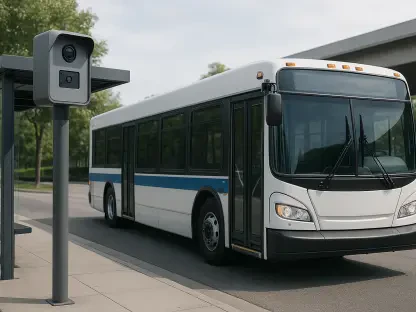
The successful integration of these technologies was achieved through a strategic focus on interoperability and localized data management. Urban centers deployed distributed sensors that communicated directly with edge nodes to manage energy grids and traffic flow, reducing carbon emissions by nearly twenty percent in early 2026. This period proved that moving compute closer to the user was essential for scaling smart city initiatives that previously struggled with bandwidth bottlenecks. Stakeholders discovered that prioritizing the standardization of edge-native software stacks ensured that AI models moved seamlessly between hardware providers. It was established that investing in containerized microservices and automated orchestration tools served as a critical requirement for managing the fleet of edge nodes. Leaders also found that building robust cybersecurity frameworks protected these distributed assets. The era of localized intelligence arrived, and those who mastered it won the edge.