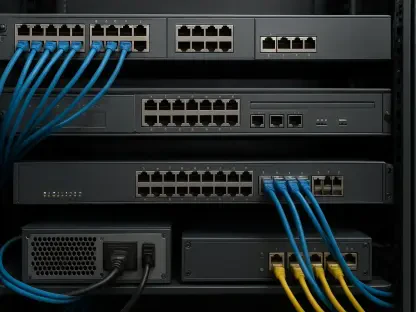

Modern enterprise networks have evolved into hyper-distributed ecosystems where the traditional reliance on manual human oversight often leads to catastrophic visibility gaps and operational paralysis. As the digital landscape in 2026 demands instantaneous response times and absolute reliability, the friction caused by an overabundance of monitoring tools has become the primary bottleneck for IT departments worldwide. The current state of infrastructure is no longer manageable through sheer workforce expansion; instead, it requires a fundamental transition toward intelligent, automated systems. Organizations are finding that the complexity of multi-cloud environments has outpaced the cognitive limits of even the most skilled engineering teams, creating an urgent mandate for change. This shift is not merely about adopting new software but about redefining the relationship between data and decision-making within the modern enterprise.
The Shift From Tool Sprawl to AI-Driven Unification
The expansion of specialized software has led to a phenomenon known as tool sprawl, where IT professionals find themselves buried under a mountain of disconnected data. Recent industry evaluations indicate that approximately 45% of IT practitioners are currently struggling with the immense staffing and skill-related burdens associated with managing six to eight disparate observability platforms. This fragmentation creates a significant drain on resources, as talent is diverted from strategic innovation to the mundane tasks of tool maintenance and cross-platform synchronization. Moreover, the time required to manage various Application Programming Interfaces and integrations has become a primary source of operational inefficiency, leading to cognitive burnout across engineering teams.
Current Market Growth and Adoption Metrics
As organizations move from 2026 toward 2028, the emphasis has shifted from simply collecting more data to the active integration of Artificial Intelligence to make that data actionable. The current market trends suggest that observability unification is no longer a distant goal but an immediate priority for 51% of enterprises. These organizations are working to streamline their data environments to eliminate the silos that prevent a holistic view of network health. The transition from passive monitoring—where humans must interpret every signal—to active AI-assisted integration marks the beginning of a new era in network management where data is processed at machine speed.
Statistical insights from Enterprise Management Associates further highlight that this transition is being driven by a need for better operational outcomes rather than just technical curiosity. Organizations that have successfully consolidated their toolsets report a significant reduction in the time spent on manual data correlation. By creating a unified data narrative, these companies can leverage machine learning models more effectively, as the algorithms have access to a complete and consistent dataset. This trend toward unification is expected to accelerate as more businesses recognize the high cost of maintaining fragmented visibility in an increasingly competitive digital economy.
Real-World Applications and Industry Use Cases
The practical deployment of AI in these high-traffic environments has yielded transformative results, particularly in the reduction of alert noise that often plagues large-scale operations. By implementing automated incident summaries and sophisticated alert correlation, teams can now focus on high-priority issues without being distracted by thousands of non-critical notifications. For instance, in a hybrid cloud setup, AI can correlate a minor latency spike in a database with a configuration change in a remote server, a connection that might take a human hours to identify. This level of automated synthesis is proving vital for maintaining the uptime required by modern digital services.
Beyond simple noise reduction, anomaly detection algorithms are now identifying hidden patterns across multi-cloud infrastructures that consistently bypass traditional human observation. These systems analyze vast datasets in real-time to spot deviations from established baseline behaviors, often predicting failures before they impact the end-user. Predictive analytics for root-cause analysis have become a cornerstone of this strategy, drastically reducing the Mean Time to Resolution. By pinpointing the exact source of a problem through statistical modeling, IT departments are shifting from reactive fire-fighting to proactive system optimization, ensuring that the network infrastructure remains resilient under varying loads.
Industry Perspectives on Governance and Data Integrity
The quest for a single pane of glass has long been a holy grail for network administrators, yet industry experts like Shamus McGillicuddy argue that the focus must shift toward unified data narratives. Rather than hoping for one tool to do everything, the goal is to ensure that the multiple tools in use are providing a synchronized and accurate picture of reality. Centralized tool ownership has emerged as a critical factor in this process, ensuring that the data inputs fed into machine learning models are of the highest quality. Without strong governance, AI systems are likely to produce incorrect conclusions based on fragmented or low-fidelity data sources, which can lead to misguided operational decisions.
This evolution also brings a philosophical shift from deterministic to probabilistic infrastructure management. Traditional networking is built on fixed rules where specific inputs lead to guaranteed outputs, which is a deterministic approach. However, AI operates on probabilities, predicting the most likely cause of an issue based on historical trends and statistical likelihoods. This transition forces organizations to reconsider their operational strategies, moving away from rigid manual controls toward a model that values the statistical accuracy provided by machine intelligence. Successfully navigating this shift requires a governance framework that understands both the power and the inherent limitations of these probabilistic models.
Future Outlook: Autonomous Infrastructure and Agentic AI
As the industry looks toward the roadmap spanning from 2026 to 2028, the emergence of Agentic AI stands to revolutionize network autonomy. Unlike traditional AI that merely flags problems for human review, agentic systems are designed to act independently, performing network modifications and traffic rerouting without direct human intervention. This move toward self-healing infrastructure promises unprecedented speed in responding to security threats or performance bottlenecks. However, the speed of such automation introduces significant challenges in risk management, requiring a new approach to human-in-the-loop oversight to prevent automated errors from cascading through the system.
The role of the IT professional is subsequently undergoing a profound transformation, moving from the front lines of manual troubleshooting to the higher-level strategic governance of these autonomous systems. This evolution demands a shift in skill sets, where understanding the logic of AI agents becomes as important as understanding the physical hardware of the network. Cybersecurity protocols must also adapt to mitigate the risk of statistical errors in network logic, ensuring that autonomous actions do not inadvertently create vulnerabilities. Long-term success will depend on the ability of organizations to balance the rapid pace of machine intelligence with the nuanced judgment and ethical oversight of human experts.
Summary and Strategic Synthesis
The path to successful AI integration was fundamentally linked to the resolution of tool sprawl and the achievement of data unification across the enterprise. Organizations that prioritized the centralization of their observability platforms found that machine intelligence could be leveraged more effectively to drive tangible business outcomes. The journey toward operational maturity required a steadfast commitment to high-quality data governance and a willingness to embrace probabilistic management models over traditional rigid structures. Ultimately, the transition to autonomous infrastructure was not just a technical upgrade but a profound cultural shift in how enterprises viewed the intersection of human expertise and machine capabilities.
Strategic leaders recognized that the true value of AI lay not in the replacement of human insight but in the liberation of personnel from the exhausting burdens of manual data synthesis. By establishing robust governance frameworks and clear boundaries for agentic systems, the modern enterprise secured a more resilient and responsive digital foundation. The move toward unified observability served as the essential bridge between the chaotic fragmentation of the past and the intelligent, self-sustaining networks of the current era. The synthesis of these elements ensured that the enterprise remained competitive and agile in an increasingly automated world, setting a new standard for operational excellence.