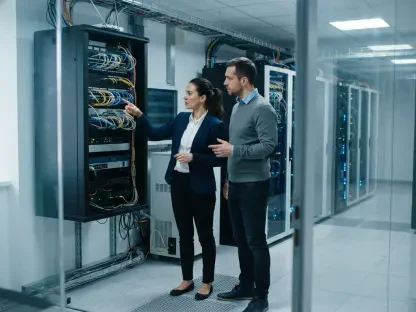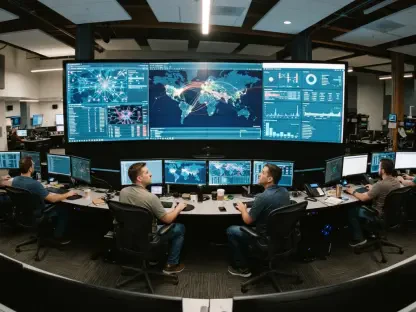

The emergence of decentralized workforces and cloud computing has effectively dissolved the traditional enterprise perimeter, making hardware-centric security models obsolete. For decades, corporate infrastructure functioned like basic plumbing, designed primarily to connect stationary employees in
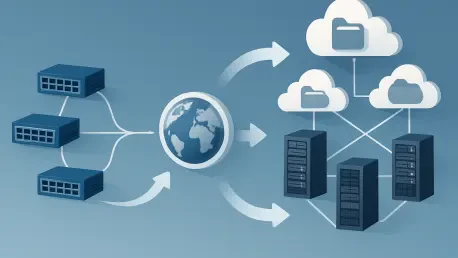
While Multiprotocol Label Switching once provided the predictable performance required by the finance industry, its control mechanisms remained firmly in the hands of service providers. This historical dynamic forced enterprises into a passive role, where they were essentially renters of
Google Cloud has introduced the Agent Compute Engine to address the unique infrastructure challenges of hosting autonomous AI agents that must execute code and use external tools. This development marks a significant departure from the early days of generative AI, where simple text-based

The complexity of modern cloud environments has reached a critical threshold where human oversight alone is no longer sufficient to guarantee structural integrity, cost-efficiency, or security in real-time. This review explores the evolution of the AWS Well-Architected Agent, its core features, and
The shift from monolithic, carrier-owned data centers to vibrant, open-access ecosystems has fundamentally rewritten the rules of corporate networking and digital agility for the contemporary enterprise. In this environment, the traditional reliance on a single telecommunications provider has

An expired or misconfigured SSL certificate can trigger security warnings that immediately turn away visitors even if the underlying server is technically operational. In the high-stakes digital landscape of 2026, the distinction between a functioning server and a usable website is thinner than