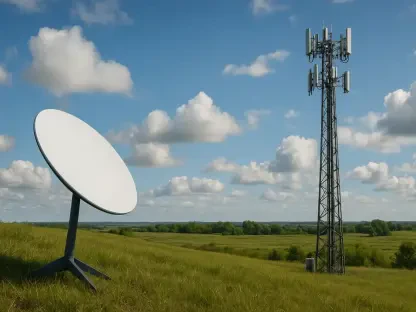
The challenge of maintaining high-speed Wi-Fi performance while introducing satellite uplinks in the 5.8 GHz band remains a central technical hurdle for federal regulators. This concern is at the heart of a significant new initiative by the Federal Communications Commission to bridge the gap
The integration of 3D digital twins and autonomous monitoring effectively reduces downtime by providing continuous visibility into the status of remote assets. In the current industrial landscape, the fusion of mission-critical communications and artificial intelligence is no longer a futuristic

The FCC's temporary waiver for spectrum use through October 2029 provides the first legal framework for conducting large-scale testing of airborne cellular performance. This regulatory shift marks a turning point in the integration of Unmanned Aircraft Systems into the national airspace, moving

Managing multiple Tier 1 wireless contracts often creates logistical friction and fragmented billing cycles for modern enterprise IT departments. Imagine a national logistics firm attempting to maintain real-time telemetry across a fleet of five thousand vehicles while juggling separate service

Traditional IoT design workflows often require exhaustive antenna tuning and validation to prevent interference between positioning components and cellular hardware. In the current landscape of autonomous systems, achieving centimeter-level accuracy usually involves navigating a labyrinth of Radio

The transition from reactive management to a proactive data-driven model requires granular visibility into every stage of an asset's journey. In the current global economy, the ability to see deep into the logistics network has moved from a competitive advantage to a fundamental requirement. Supply