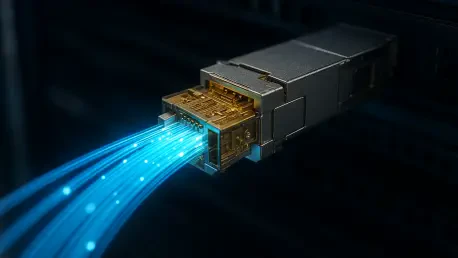
The relentless acceleration of artificial intelligence has pushed data center infrastructure beyond its traditional limits, necessitating a radical shift toward optical solutions capable of handling massive 224G per lane throughput. As hyperscale data centers grapple with the immense data demands

Enterprise network teams frequently lose more than twelve hours per week manually correcting configuration errors that stem from traditional hardware management methodologies. This persistent inefficiency has forced a radical departure from the long-standing reliance on command-line interfaces

The relentless expansion of artificial intelligence has pushed traditional data center architectures toward a catastrophic bottleneck where electrical switching can no longer keep pace with the massive throughput required by modern GPU clusters. This crisis has catalyzed the rise of Optical Circuit

Matilda Bailey has spent years at the intersection of cellular and wireless infrastructure, but lately, her focus has shifted toward the physical glass backbone of the digital economy. As data centers balloon in size and complexity, she is observing a critical shift where connectivity is no longer
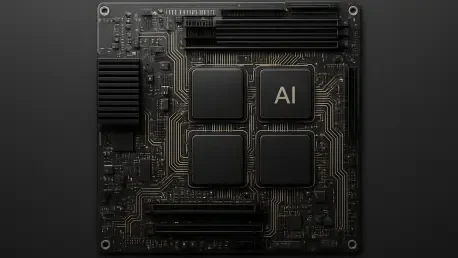
The rapid architectural transition of the modern data center has elevated networking from a secondary support function to the primary bottleneck of large-scale artificial intelligence training. As generative AI models expand in complexity, the hardware required to facilitate communication between

The race to achieve artificial intelligence at a gigawatt scale has fundamentally transformed the global cloud market into a high-stakes arena where traditional data center architectures no longer suffice. In the current landscape of 2026, the separation between raw hardware capabilities and