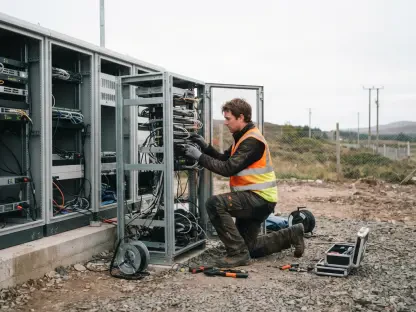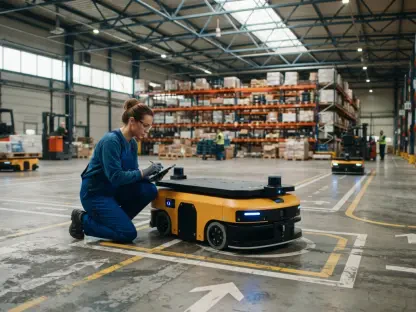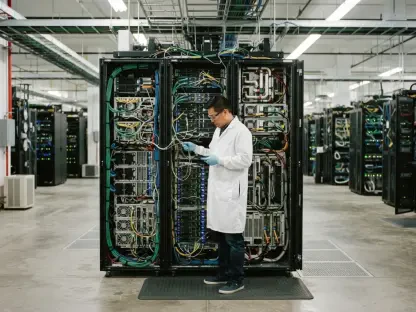

Selecting the wrong IoT development firm can easily burn an entire year of startup runway on hardware prototypes that ultimately fail to ship or function in real-world environments. In 2026, the landscape of the Internet of Things has matured into a complex ecosystem where hardware reliability and

Nokia identifies a critical shift toward intensity-modulation direct-detection optics to meet the demanding link budgets of high-performance AI workloads. As modern data centers evolve into massive processing engines, the traditional reliance on copper and standard networking protocols is being

A junior analyst entering the modern workforce might find that the tedious spreadsheet tasks once considered a fundamental rite of passage have been swallowed whole by algorithmic efficiency. For generations, the "grind" of administrative labor served as a crucible where raw talent was forged into

The SAIDE algorithm integrates simulated annealing and differential evolution to pinpoint weak points in digital infrastructure before they can be exploited by hardware failure or cyber-attacks. As we progress through 2026, the invisible mesh of Wireless Sensor Networks (WSNs) has transitioned from

A new framework integrates physical unclonable functions directly into the routing layer to ensure that every participating node passes a hardware-rooted identity check. This advancement emerges as the Internet of Things transitions into a mission-critical infrastructure that supports nearly every

Enterprises are leveraging edge processing to enhance reliability by reducing their dependence on centralized cloud environments for critical real-time decision-making. This strategic pivot marks a significant maturation in the global Internet of Things landscape, where the focus has decisively