
The traditional enterprise network, once viewed merely as a static arrangement of cables and switches, has reached a critical breaking point where manual human intervention is no longer capable of sustaining the exponential growth of modern data processing. For several decades, the primary role of

The global telecommunications landscape has reached a critical juncture where the convergence of extreme market volatility and the rapid maturation of artificial intelligence demands a radical shift in infrastructure management. While legacy systems struggle to maintain uptime under fluctuating

The complete dissolution of the traditional enterprise network perimeter has left organizations grappling with an environment where trust is no longer a given but a significant liability. In this current landscape, the old "castle-and-moat" strategy has become obsolete as cloud computing and remote

The modern telecommunications landscape has evolved into an incredibly complex ecosystem where traditional manual oversight is no longer sufficient to maintain the stringent performance metrics required for mission-critical industrial applications. As 5G standalone deployments expand across the

The rapid evolution of corporate technology has shifted dramatically from the initial curiosity surrounding generative models to the widespread deployment of fully autonomous agents capable of independent decision-making across complex enterprise workflows and customer-facing interfaces. As these
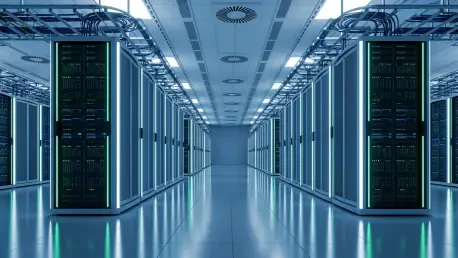
The global landscape of high-performance computing underwent a fundamental transformation when the silicon barriers of the past dissolved to make way for the integrated rack-scale supercomputing model known as Nvidia Vera Rubin. This launch signals a departure from the traditional approach of